For contractors, a good credit management policy goes a long way to reducing the risk of non-payment. It should set guidelines for extending credit, and include a well-written collections policy...
If working on a project using the American Institute of Architects (AIA) payment applications, the GC will likely require you to provide a continuation sheet along with it. It’s known...
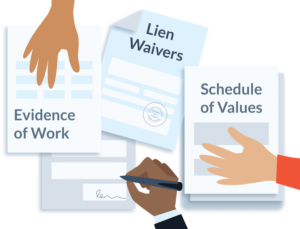
For most projects, a simple invoice is all you need to submit in order to get paid. On larger projects, particularly in commercial construction, there may be additional documents that...
A construction project is a fluid and somewhat unpredictable animal. Once the project is underway, it rarely goes according to plan. Owners can change their minds, or unforeseen issues may...
Every construction project is unique, including the payment terms and documents you need to provide to receive payment. A number of construction projects will require subcontractors to use a payment...
General contractors (GCs) and subcontractors (subs) work together closely on projects. With money, reputation, and egos on the line, disagreements are bound to happen. Property owners, GCs, and subs all...
No matter how hard contractors try to avoid this situation, the reality is, construction payments are slow. According to the 2019 National Construction Payments Report, about half of all U.S....
Getting paid is one of the biggest challenges facing the construction industry, which can be both demoralizing and frustrating. In fact, the 2019 National Construction Payments Report shows that over half...
Managing cash flow is difficult for any company, but construction cash flow problems are some of the worst. Slow, late, and partial payments can cause serious cash flow issues for...
You may not even know it, but you could be forced to settle your next construction payment dispute through arbitration. Arbitration clauses are included in most construction contracts these days,...